How the AgustaWestland AW139 VIP Redefined Helicopter Luxury
Weststar Aviation Editorial
28 Feb 2025
5 min read
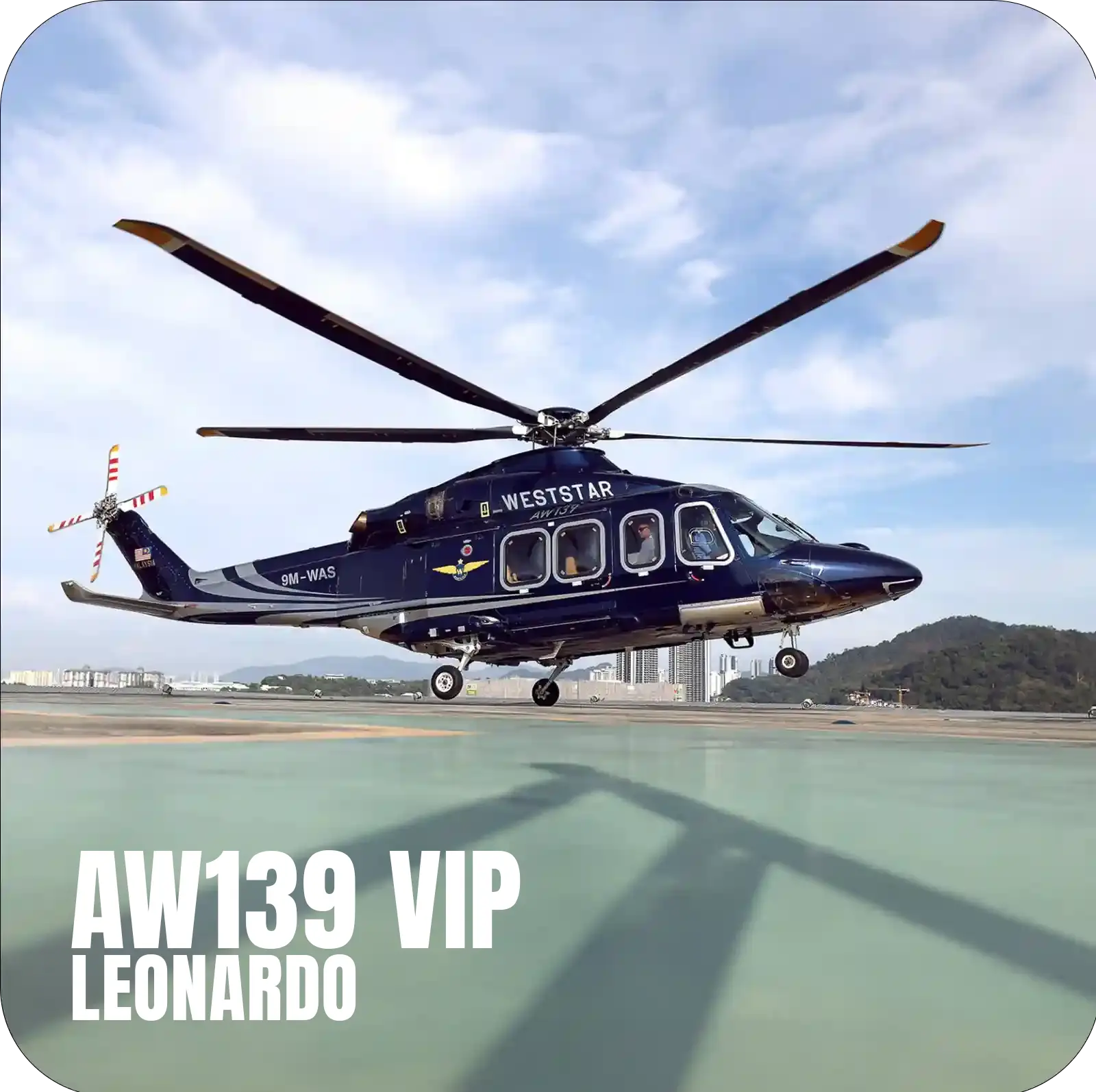
When AgustaWestland introduced the AW139, the rotary-wing world changed. Here, we explore the engineering and interior design philosophy behind the aircraft that became the global benchmark for VIP helicopter travel — and why Weststar made it the centrepiece of our charter fleet.
A Clean Sheet in 2003
The AW139 entered service in 2003 as a joint venture between AgustaWestland and Bell Helicopter — a genuinely clean-sheet design at a time when most twin-engine helicopters were evolutionary updates of decade-old platforms. Its designers started not from an engineering specification but from a passenger experience brief, and the result shows.
The wide, flat-floor cabin — at 1.98 metres wide and 1.43 metres high — is broader than many light business jets and allows true side-by-side seating for twelve passengers in a configuration that feels genuinely spacious rather than tolerably adequate. The fuselage cross-section was determined by the comfort of the passenger, not the convenience of the airframe engineer.
The Noise Problem Solved
Helicopter cabin noise has historically been the single greatest barrier to VIP rotary-wing travel. The AW139 addresses this through a five-blade main rotor system with advanced blade geometry that dramatically reduces aeroacoustic noise at cruising speed, combined with a multi-layer fuselage insulation package and active noise control systems at each passenger station. The result — particularly when combined with Bose QuietComfort headsets fitted to Weststar's aircraft — is a cabin ambient noise level approaching that of a light business jet.
The AW139's cabin noise level at cruise is among the lowest of any twin-engine helicopter ever built. Combined with our Bose QuietComfort headset provision, it creates an environment in which conversation, telephone calls, and in-flight entertainment are all genuinely comfortable experiences.
Interior Configuration in Weststar Service
Weststar's AW139 VIP is configured by our in-house design team in collaboration with our completion centre partners to a standard that reflects the calibre of clients who fly with us. The forward four seats are arranged in a two-by-two club configuration with fold-out tables, individual reading lights, and USB and 12V power at each station. The rear eight seats are arranged in a four-by-four configuration divided by a privacy partition from the forward club.
Bespoke catering is prepared to order by our culinary partner and loaded into the aircraft's custom galley unit ahead of departure. The communications system allows satellite phone calls, high-speed Wi-Fi, and entertainment streaming at all passenger stations. The climate control system maintains separate temperatures in the forward and aft zones, with individual vents at each seat.
Performance That Delivers
The AW139's twin Pratt & Whitney Canada PT6C-67C turboshaft engines deliver Category A performance from all approved helipad sites — meaning the aircraft can continue a mission safely even in the event of a single engine failure at the most critical point of departure or landing. With a range of 1,061 kilometres and a cruise speed of 306 km/h, it serves every VIP route in our network, from KL to the east coast islands to Sabah's offshore oil platforms, in a single sector.
Plan Your Charter
Our aviation concierge team is available 24/7 to plan any journey mentioned in this article.
More from the Journal
Our Fleet

Explore Our Aircraft
Experience Private Aviation with Weststar
Our concierge team is available around the clock to plan your charter — whether for business, island escapes, or international travel.